During the holidays, the house fills up fast. Adult kids come home for a long weekend. Grandparents settle in for a week. The kitchen sees more company in a month than it might all spring, and every chair in the family room gets claimed by the second night.
When we think about making our homes cozy for the holidays, we tend to picture crackling fires, soft lighting, and plenty of throw blankets. But some of the comforts we appreciate most are practical ones: a warm bathroom floor on a cold morning, a welcoming place for overnight guests, or enough storage to keep the entryway from disappearing beneath a mountain of winter coats.
If you’re considering a remodel, the holidays are a good time to notice what makes your home feel welcoming, along with the little things you wish worked better. Here are a few ideas worth keeping in mind as you plan for next year.
Make Room for Coats, Boots, and Bags
Holiday guests rarely arrive empty-handed. There are coats, boots, scarves, overnight bags, and possibly a casserole dish or two. Before long, the entryway can look like the coat check at a dinner party.
A well-planned mudroom or entryway gives everything a place to land. Built-in benches make removing winter boots easier, hooks and cubbies keep outerwear organized, and closed cabinetry helps conceal the everyday clutter. Durable flooring is another smart consideration when wet shoes and snowy boots are part of the season.
In one Harleysville home, the homeowner wanted a spot just inside the door for wet coats and outdoor gear, so none of it had to travel through the rest of the house. Relocating the walk-in pantry created space for a mudroom by the entrance, complete with a pet wash station for the family dog.
It’s a practical improvement that pays off well beyond the holidays.
Set the Mood With Layered Lighting
When the sun sets before dinner, good lighting makes all the difference in how a room looks and feels. The secret is layering different types of light so you can adjust the atmosphere throughout the day.
Ambient lighting, such as recessed ceiling lights, provides general illumination. Task lighting brightens work areas, like kitchen countertops where you’re preparing a holiday feast. Accent lighting, including wall sconces, cabinet lighting, and decorative fixtures, adds warmth and character.
Put these layers on separate switches or dimmers, and the same room can go from a bustling kitchen during meal prep to a cozy gathering place after dinner. Choosing warm-toned bulbs rather than cool, bluish light can also help create a more inviting atmosphere.
Lighting can even become part of your home’s architecture. In a Schwenksville sunroom, we incorporated color-changing LED lighting into the ceiling beams and entry steps, giving the room a welcoming glow long after sunset.
Gather ‘Round the Fire
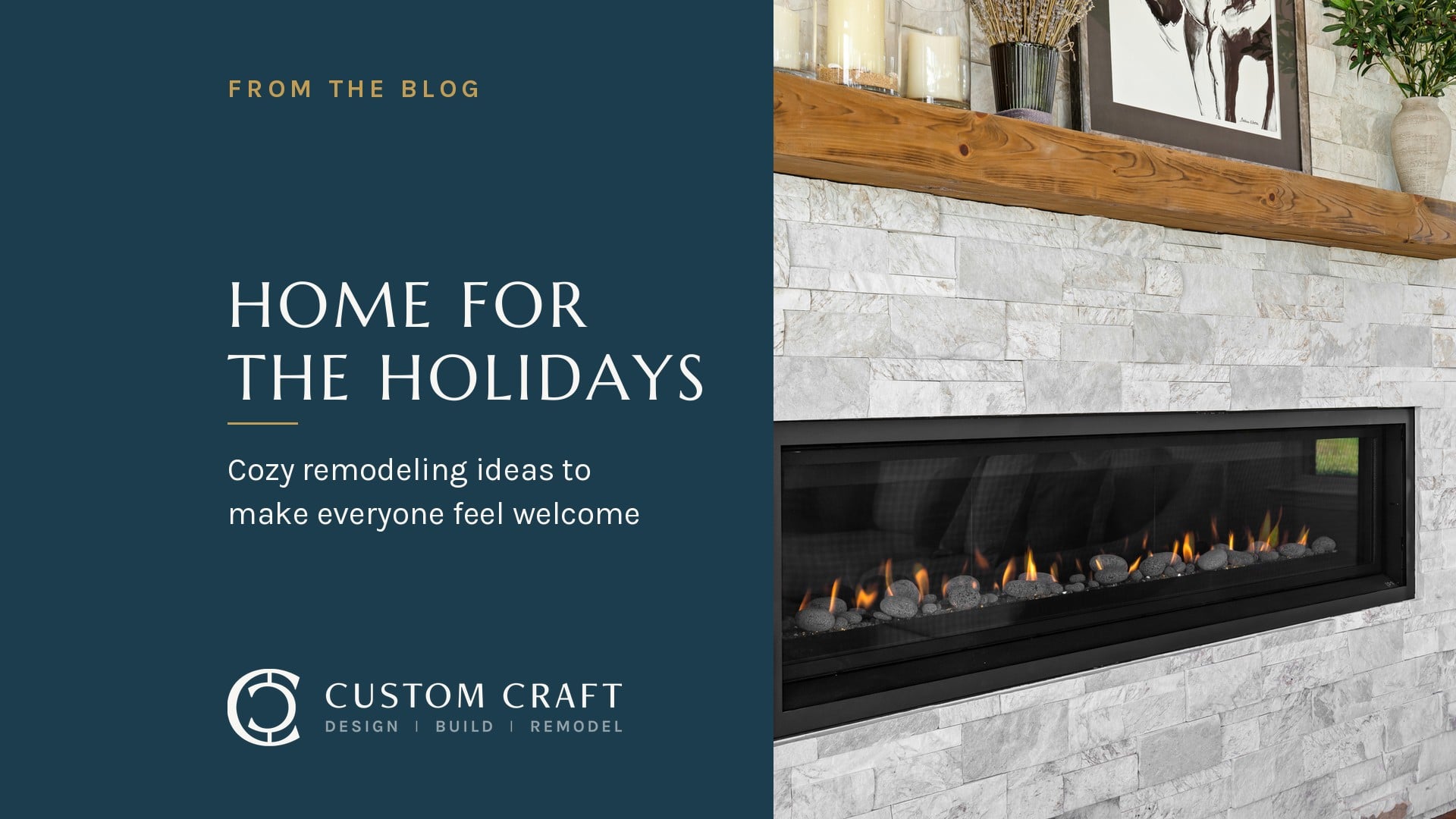
There’s something about a fireplace that makes everyone want to pull up a chair. And while traditional wood-burning fireplaces have their charms, electric and gas options offer plenty of possibilities for today’s homes.
Electric fireplaces are especially versatile because they don’t require a gas line or venting. That makes them an option for interior walls, basements, bedrooms, and home offices. Many models offer adjustable flame effects, and some even let you change the flame color. They typically provide supplemental heat, along with the cozy appearance of a fire.
In a Plymouth Meeting home office, the room features an electric fireplace set into a shiplap wall beneath a floating shelf mantel, with built-in shelving on either side. It’s an inviting focal point that brings warmth and character to the workspace.
Gas fireplaces offer real flames and generally produce more heat than electric models. They require a gas connection and appropriate venting, however, which can affect placement and installation costs.
Wood-burning fireplaces deliver that unmistakable crackle and woodsmoke aroma, although they also require more maintenance.
Which fireplace is best for your home? That depends on where you’d like it, how much heat you need, and the existing infrastructure. It’s worth exploring your options early in the remodeling design process.
Give Overnight Guests a Place to Unwind
Even the closest relatives appreciate a little breathing room when the whole family is together.
A comfortable guest bedroom with its own bathroom can make extended visits easier for everyone. For homeowners who regularly host family or friends, a finished basement with dedicated guest accommodations can offer even more privacy and independence.
In one Trooper home, an unfinished basement became an in-law suite for extended relatives’ yearly visits. It includes a kitchenette, bedroom, bathroom, and seating area, and the spacious shower features dual shower heads. The homeowners also gained a downstairs lounge they can enjoy year-round.
Of course, a welcoming guest space doesn’t have to be a complete suite. Small touches such as bedside reading lights, blackout shades, convenient outlets, and a place to unpack can make visitors feel right at home.
The guest bathroom deserves the same attention. Extra hooks, accessible storage, and enough counter space for toiletries can make it much more welcoming, especially when several family members are sharing it.
Warm Up Cold Mornings
Imagine stepping out of bed on a chilly holiday morning and walking into a bathroom with warm tile beneath your feet. That’s the appeal of radiant floor heating.
Electric radiant floor heating systems use heating elements installed beneath the finished flooring to warm the surface above. Many can be controlled with programmable thermostats, so the floor is already comfortable when you wake up.
Bathrooms are a popular choice, but heated floors can also make kitchens, mudrooms, and finished basements more comfortable during the colder months.
When should you add heated floors? Ideally, during a remodel that already involves replacing the flooring. Because the heating system is installed beneath the finished surface, planning for it during design can save the expense and disruption of tearing up a perfectly good floor later.
Little Things That Feel Like Big Luxuries
Once the floors are warm, a few smaller upgrades can make those cold mornings even easier.
Take heated toilet seats. They might sound a little extravagant, but on a freezing December morning, you’ll wonder how you ever lived without them. Today’s smart toilets can also include bidet functions, automatic lids, adjustable water temperature, and even night lights.
A heated towel rack is another small luxury that can make a big difference. There’s something especially comforting about wrapping yourself in a warm towel after a shower, and heated racks can also help towels dry between uses.
Make Next Year’s Holidays Even Cozier
The best part about these remodeling ideas? You’ll enjoy them long after the holiday decorations are packed away.
Whether you’re picturing a fireplace for family gatherings, a warmer bathroom, or a comfortable place for guests to stay, the right improvements can make your home more enjoyable every day of the year.
And if you’re hoping to have a remodeling project completed before next year’s holiday season, it’s worth planning ahead. Design decisions, material selections, and permitting all take time before construction can begin. Our guide to planning a home remodel before the holidays explains what to expect.
At Custom Craft, we start by learning what you love about your home, what you’d like to improve, and which features matter most to you. From there, we can help you explore the possibilities and make informed decisions about your remodel.
Contact our team to start planning a home that feels even more welcoming, for the holidays and every day.